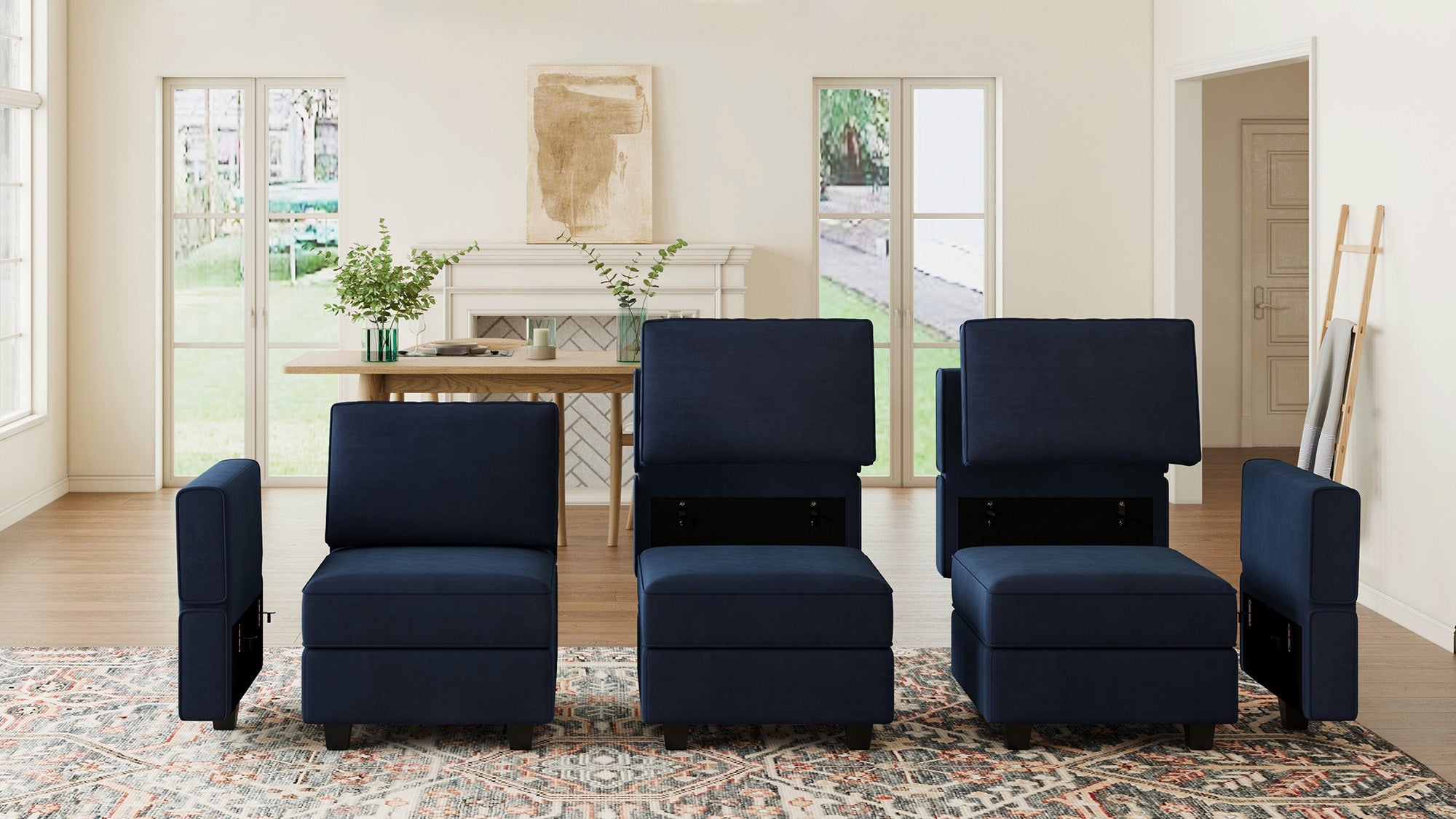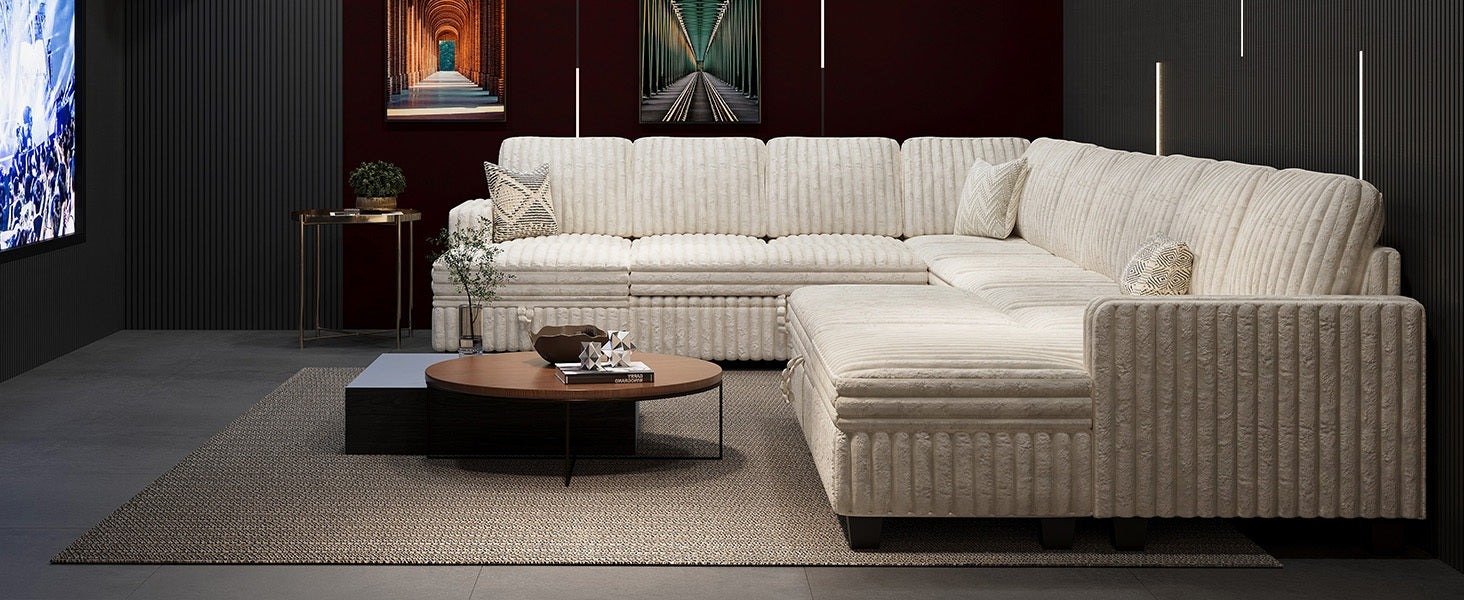




Shop By Categories


Over 200,000+ Happy reviews

Kira
I did extensive research and came among this sofa . I love the look ,the extra pillows and pull out feature, its comfortable to sit on and lay on for long periods of time and fits 2 people comfortably.

Kelli M.
The Corduroy itself is extremely soft and hasn't seemed to catch cat hair. My cat has not scratched at the fabric. It is quite staticky. Fantastic purchase and worth the price. I did peek where I could and the construction looks solid.

Anonymous
This BELFFIN modular sofa worked great. Comes in pieces, so not a problem getting down stairs. The sofa is super easy to put together. It’s also great looking.

Cynthia
This sofa is so plush and comfortable. It arrived in a LOT of boxes so be prepared. Unpack and assemble each box separately and then assemble the sofa into whatever configuration you want.

Cali
The green corduroy looks so cool and cozy in my space, and the storage under every seat is a total lifesaver. I can fit all my extra blankets, pillows, and even some random stuff.

Shayna
Perfect addition to my kids' playroom! I love adjustable backs. We have a TV mounted on the opposing wall, so it’s a great spot for watching movies!
Blog posts

Everything You Need to Know Before Buying a Bed Frame
Choosing the perfect bed frame isn't merely about selecting a piece of furniture for your bedroom; it is an investment in one-third of your life—after all, quality sleep often begins with a solid foundation. Whether you have just moved into a new home or are preparing to upgrade your current sleeping space, the dizzying array of materials, styles, and features available on the market can often leave you feeling overwhelmed. Should you opt for a storage-style frame to maximize space efficiency, or pursue the minimalist aesthetic of solid wood? Before making a purchase, it is crucial to understand the various options, dimensions, and functional roles that bed frames play. In this guide, we will take a deep dive into the essential knowledge you need to master before buying a bed frame, helping you avoid common purchasing pitfalls and create the dream bedroom that is both beautiful and practical. Choosing a New Bed Frame: Where to Start Selecting a new bed frame may seem like a simple furniture-buying task, but it actually determines the quality of your sleep for thousands of nights to come. Faced with the dizzying array of materials, styles, and features available on the market, it is completely normal to feel overwhelmed and unsure where to begin. To find the bed frame that is right for you, we recommend starting with the following three core dimensions: 1. Measure Your Space: Define Your "Physical Boundaries." Before setting your sights on any specific style, the first tool you should pick up isn't a catalog—it's a tape measure.Allow for Walkways: You should leave at least 60–90 cm of clearance on both sides of the bed frame to ensure you don't bump your legs when getting up at night or changing the sheets.Consider Furniture Interaction: If your bedroom also contains a wardrobe, ensure that the closet doors won't collide with the corners of the bed frame when opened.Plan the Delivery Route: Don't forget to measure the dimensions of stairwell turns and elevator doors—this is especially critical if you are purchasing a one-piece frame or an oversized headboard. 2. Assess Your Lifestyle: Clarify Your "Core Needs." Different people have vastly different functional requirements for a bed, and these needs should guide your selection process:The Storage Enthusiast: If bedroom space is limited, a bed frame with built-in storage or a drawer-style base is the top choice; these options can magically conjure up the storage capacity of several large closets out of thin air.The Bedtime Reader: If you are in the habit of leaning back in bed to read or use your phone, an upholstered bed frame will offer superior support and comfort compared to frames with solid wood or metal headboards.Pet Owners: Given the potential for scratching and cleaning challenges associated with pets, durable and low-maintenance materials—such as high-performance fabrics or metal frames—will be far less of a hassle than genuine leather. 3. Check for Stability: The Invisible "Skeleton" Matters Most The durability of a bed frame depends largely on the construction of its slat system or base.Slat Spacing: Check the spacing between the wooden slats. It is generally recommended that the gaps do not exceed 7 cm; otherwise, the mattress may sag or deform, thereby shortening its lifespan.Support Legs: Large-sized bed frames (such as King Size) must feature additional support legs in the center to prevent the middle section from collapsing. Noise Test: When making a purchase, try applying slight pressure; a high-quality bed frame should not produce any squeaking or unusual noises. Bed Frame Size Guide: Making the Most of Your Space Many people fall into the trap of thinking "the bigger, the more comfortable" when buying a bed, often overlooking the spatial relationship between the bed frame and the surrounding walls, wardrobes, and nightstands. An ideal bed should not only cradle your dreams but also ensure your bedroom feels spacious and uncluttered. Below is a guide to common bed frame sizes: Twin Size Bed Frame: Approx. 99 x 191 cm. Best suited for children's rooms or extremely small apartments. If intended for use as a guest bed, we recommend choosing a model with a pull-out or extendable feature for greater versatility.Full Size Bed Frame: Approx. 137 x 191 cm. Although often referred to as a "double bed," it may feel slightly cramped for two people; it is, however, an excellent value choice for teenagers' rooms or for individuals seeking the ultimate solo sleeping experience.Queen Size Bed Frame: Approx. 152 x 203 cm. The most popular size globally. It strikes a perfect balance between sleeping comfort and floor footprint, making it suitable for the vast majority of master bedrooms.King Size Bed Frame: Approx. 193 x 203 cm. If you share your bed with a partner, children, or pets that occasionally "squeeze in," this size offers a sense of spaciousness akin to a five-star hotel. However, a key prerequisite is that your bedroom must have a width of at least 3.6 meters. Are Bed Frames Important? A bed frame not only determines the aesthetics of your bedroom, but also your sleep structure and the lifespan of your mattress. Therefore, choosing the right bed frame is crucial. The core functions of a bed frame: Supporting the mattress and preventing sagging: Mattresses need even support. If the spacing between the slats of the bed frame is too large (more than 7-8cm) or if the structure is unstable, the mattress will sag due to uneven pressure, ruining expensive latex or individually pocketed spring mattresses. Extending mattress lifespan: A good bed frame provides necessary ventilation. Mattresses accumulate moisture from the body during use. If placed directly on the floor or on a poorly ventilated bed frame, mold and dust mites can easily grow. Silence and stability: Inferior bed frames often creak when you turn over. This is usually due to loose frame connections or an overly lightweight material, severely affecting deep sleep. Key Considerations When Choosing a Bed Frame Stability: Ideally, look for a frame with a "center support" (i.e., an extra support leg located in the middle of the bed); this prevents the bed slats or beams from bowing in the center.Height: The combined height of the bed frame and mattress is ideally around 50–60 cm. A bed that is too high or too low places undue strain on the knees, a particular concern for the elderly.Eco-friendliness: If you opt for a solid wood or engineered wood frame, pay close attention to its formaldehyde emission rating. Solid wood (such as North American black walnut or oak) is generally more durable and eco-friendly, whereas with engineered wood frames, it is crucial to inspect the quality of the edge-banding craftsmanship. Transform Your Bedroom Today Choosing the ideal bed frame is, at its core, about finding the perfect balance between spatial efficiency, aesthetic style, and the science of sleep. Whether you lean toward a storage bed frame to maximize space or are captivated by the warm texture and minimalist design of an upholstered bed frame, the most critical step is to identify the option that truly complements and supports your lifestyle. Don't let creaking noises or cluttered surroundings disrupt your sweet dreams any longer. Take your measurements, clarify your needs, and find the sturdiest companion for your beloved mattress today. A simple change can ensure that every morning begins with a renewed sense of comfort and tranquility.
Learn more
How to Choose the Perfect Bed Frame for Your Bedroom
Creating an ideal bedroom involves far more than simply selecting comfortable bedding; it centers on the "soul"—the bed frame—that sets the space's tone. It serves not only as the foundation for a restful night's sleep but also as the nexus where bedroom aesthetics and functionality converge. Faced with a dazzling array of materials, heights, and added features available on the market, the selection process can often feel overwhelming. Should you opt for an upholstered bed featuring elegant tufting, or a bed frame with built-in storage that discreetly stows away your seasonal wardrobe? In this comprehensive buying guide, we aim to simplify your decision-making process. By exploring key aspects—such as bed frame types, defining your bedroom's style, and determining the right dimensions—we will walk you through how to identify the perfect bed frame: one that not only enhances your sense of domestic well-being but also fits seamlessly into your bedroom space. Choosing the Perfect Bed Frame Type When selecting a bed frame, functional requirements and space utilization are often the decisive factors. A bed frame is not merely a stand for supporting a mattress; it is a central piece of furniture that defines the bedroom's flow and storage logic. 1. Upholstered Beds — The Premier Choice for Ambiance and Comfort If you enjoy leaning back against the headboard to read or browse on your phone before falling asleep, an upholstered bed is the undisputed top choice.Features: The headboard and frame are wrapped in fabric or leather, padded with high-density foam.Advantages: Offers a soft, pleasant tactile feel that instantly elevates the bedroom's sense of warmth and sophistication; for households with children or pets, the padded edges also effectively prevent bumps and bruises.Suitable Styles: Modern Minimalist, French Vintage, "Cream Style" (Soft & Neutral). 2. Bed Frames with Storage — A Lifesaver for Small Spaces and Storage Enthusiasts For bedrooms with limited storage capacity, the "invisible real estate" beneath the bed is space that simply cannot be wasted.Drawer Style: Features side-mounted sliding drawers—ideal for storing underwear, socks, or bed linens—allowing for easy access.Gas Lift Style: The entire slatted base lifts effortlessly to reveal a massive storage compartment beneath—perfect for stowing seasonal bedding, suitcases, and other bulky items.Core Advantage: Maintains a visually minimalist and clutter-free bedroom aesthetic by keeping miscellaneous items "out of sight." 3. Platform Beds — Pursuing a Sense of Lightness and Openness Platform beds typically feature a sleek, minimalist design and do not require an additional box spring, making them a mainstream choice in modern aesthetics.Features: Robust structure with a moderate height off the ground.High-Leg Design: If you desire a more open visual space—or if you own a robotic vacuum cleaner—a high-leg platform bed is the optimal choice; it facilitates airflow beneath the bed and makes cleaning a breeze.Floor-Standing Design: Offers a more grounded, substantial presence, providing a sense of stability and a cozy enclosure. 4. Modular Beds — Flexibility to Adapt to a Changing Lifestyle Just as modular sofas have transformed the living room, modular bed frames are now redefining the bedroom.Features: The headboard, side panels, and even storage accessories can be combined or swapped out as your needs evolve. Ideal Use Cases: If you plan to move in the near future or enjoy periodically rearranging your bedroom layout, a modular design lets your furniture "grow" and adapt to your space. Choosing a Bed Frame That Harmonizes with Your Room's Interior Style 1. Modern Minimalist Style — Simplicity is Beauty Modern minimalism emphasizes openness and clean, refined lines.Bed Frame Characteristics: Favors low-profile platform beds; eschews fussy ornamentation; and may even feature a headboard-less design.Material Suggestions: Matte metal, fine microfiber leather, or light-colored wood with natural grain patterns.Key Pairing Tip: Opt for a design with slender, elevated legs. This creates the visual illusion that the bed is "floating" above the floor—a sense of visual lightness that makes the bedroom appear more spacious while also allowing easy access for robotic vacuums. 2. Creamy & Wabi-Sabi Styles — Warmth and a Sense of Envelopment The core of these two styles lies in creating a healing, stress-free home atmosphere.Bed Frame Characteristics: Upholstered beds featuring rounded corners, avoiding any sharp angles or harsh edges.Material Suggestions: Bouclé fabric, cotton-linen blends, or matte suede/leather. The color palette centers on oat, creamy white, or soft, earthy tones.Key Pairing Tip: Emphasize a "low center of gravity." A substantial, floor-standing upholstered bed frame provides a sense of grounded psychological security—as if the surrounding space is gently enveloping you. 3. Industrial & Modern Nordic Styles — Texture and Structural Form If you prefer a look that is crisp, cool, or possesses an authentic, natural texture.Bed Frame Characteristics: Iron frames with a strong structural presence, or frames made from dark, solid wood.Material Suggestions: Slender black iron tubing, or walnut or oak wood featuring natural knots and grain patterns.Key Pairing Tip: For the Industrial style, try creating a visual contrast between the iron frame and leather upholstery; for the Nordic style, lean toward preserving the natural wood tone, using the inherent warmth of the timber to soften the coolness of white walls. 4. French Chic Style — Elegance and a Sense of Occasion The essence of vintage-inspired style lies in a quality of "effortless sophistication."Bed Frame Characteristics: Headboards featuring tufted detailing or intricate carved accents. Material Suggestions: Velvet offers a superb lustrous finish, while a wooden bed frame featuring vintage rattan elements provides a charming alternative.Key Styling Element: A towering, upholstered headboard is the very soul of French-style decor; it lends the space a sense of three-dimensional depth, instantly infusing the bedroom with the ambiance of a five-star hotel. Choosing a Bed Frame Suited to Your Room's Size and Space When selecting a bed frame, the most common regret isn't a mismatch in style, but rather the dilemma of it being "too large and making the room feel cramped, or too small and being impractical." A bed frame's dimensions affect not only the quality of your sleep but also the fluidity of the bedroom's circulation paths.To strike a balance between comfort and usable space, here are some recommendations for choosing a bed frame based on room size: 1. Follow the "60–90 cm" Golden Rule for Circulation Regardless of the bedroom's size, you must leave adequate clearance around the bed for movement.Side Passageways: Maintain a minimum clearance of 60 cm between the bedside and the adjacent wall (or wardrobe) to ensure smooth passage.Door Clearance: If there is a hinged-door wardrobe on the side, it is advisable to leave 90 cm of space to ensure you can turn around comfortably after opening the wardrobe doors.Foot-of-Bed Clearance: Leave 60 cm of space between the foot of the bed and the opposite wall; this not only creates a visually "airier" feel but also makes it easier to change your bedding. 2. Small Apartments / Guest Bedrooms (10–15 sq m): Harnessing "Visual Illusions." In compact spaces, the selection of a bed frame should prioritize "lightness" and "multifunctionality."Recommended Type: Legged Platform Bed.Rationale: Exposing more of the floor area makes the room appear visually more spacious. Furthermore, a raised design (with legs 15–20 cm high) facilitates cleaning by robotic vacuums, eliminating hard-to-reach dust traps.Note: Try to avoid upholstered beds with wide, bulky side panels; these typically extend 10–20 cm beyond the mattress, thereby encroaching on valuable walkway space.Storage Solutions: Consider a storage bed with drawers to provide wardrobe-like storage beneath the bed frame. 3. Master Bedrooms / Large Spaces (20+ sq m): Enhancing "Visual Presence." In a large room, a bed frame that is too slender or minimalist can make the space feel empty and lacking in warmth.Recommended Type: Floor-length Upholstered Bed.Rationale: This type of bed frame possesses a greater sense of "visual weight," allowing it to anchor and balance the expansive scale of a large room. The tall, wide headboard design serves not only as a comfortable backrest but also as a decorative extension of the wall itself. Proportional Control: Feel free to boldly opt for a Queen or King-sized bed, paired with a bench at the foot of the bed, to enhance the sense of depth and visual grandeur within the space. 4. The Impact of Ceiling Height on Visual Space Low Ceilings: If your room features a low ceiling, select a "low-profile" bed frame. Keeping the headboard height under 100 centimeters helps visually elongate the vertical lines of the walls, preventing the room from feeling oppressive.High Ceilings: Consider a four-poster canopy bed or a bed frame with an extra-tall headboard; use the vertical height to elegantly define and frame the sleeping area. Choose Your Bed Frame at Belffin Finding the perfect bed frame can seem like a challenge, but it’s actually simpler than you might think. Our best advice? Choose a bed frame that never goes out of style. That’s precisely why we love modern design—it stands the test of time. Explore the Belffin bed frame collection and choose from a variety of designs to find the style that best suits your tastes, preferences, and needs.
Learn more
We are Featured on